Start from the job. Then read the numbers properly.
The right tool is a job first and a specification second.
Pick what you are trying to do and we will tell you which single number actually decides it — and which ones are noise. We are researchers and hobbyists, not tradespeople, and we have not tested these tools.
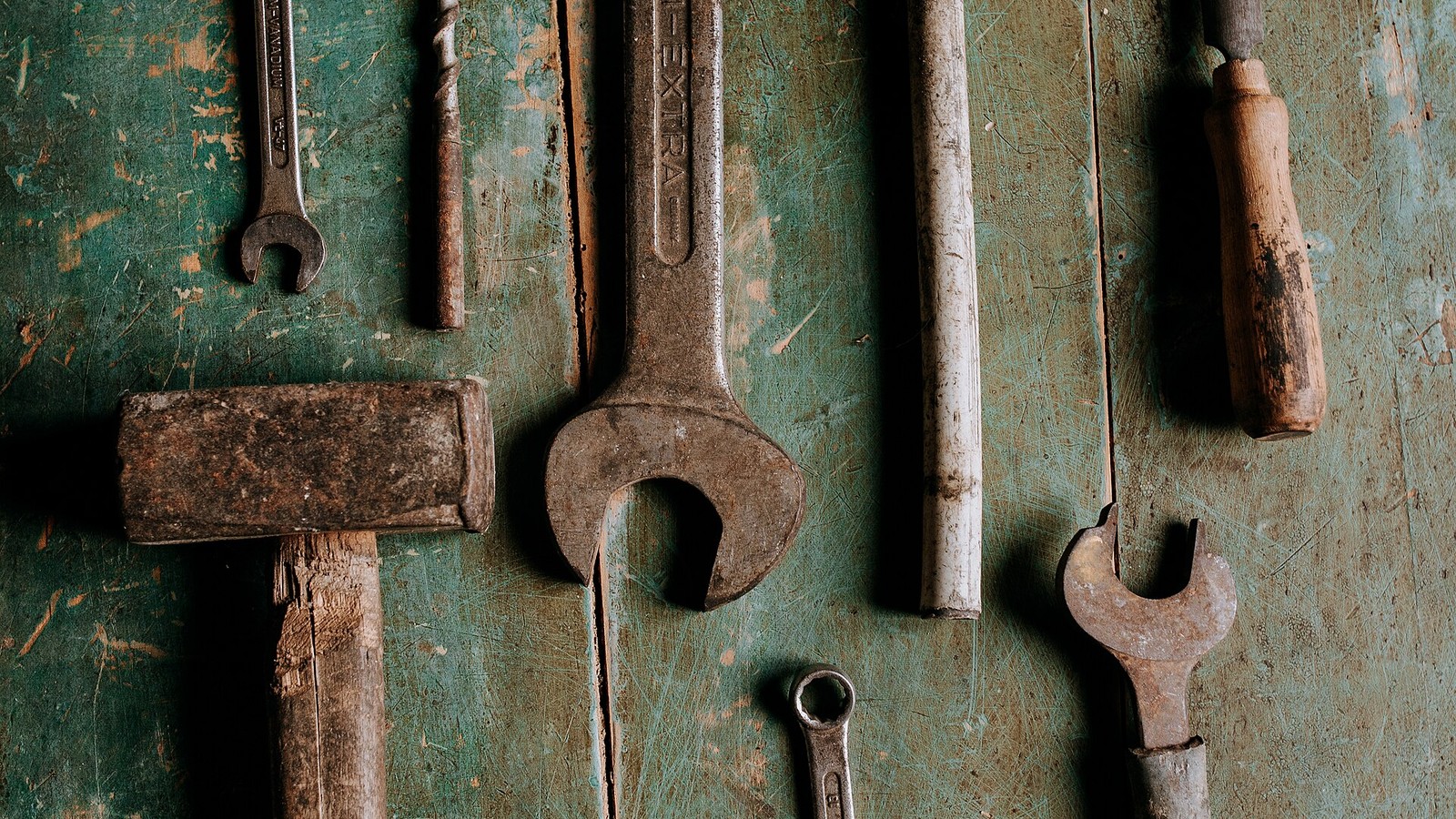
Photo by Shixart1985, Wikimedia Commons, CC BY 2.0 — cropped.

Start here
What are you trying to do?
Six jobs cover most of a home workshop, a garage and a garden shed. Each one hangs on a different specification — which is why a single “best tool” answer never survives contact with an actual task.
The decoder
What each specification actually tells you
Every number on a tool box is true, and most are close to useless alone. The third column is the one nobody prints.
Recently
Newest on the bench
- Portable Workbench: What It’s Good For and Its Limits
- How Should a Small Garage Workshop Actually Be Laid Out?
- What Is the Point of a Torque Wrench’s Storage Case?
- What Is a Magnetic Parts Tray and Why Mechanics Trust It?
- What Does Workshop Temperature Do to Tools and Materials?
- How Should Power Tool Batteries Be Stored Safely?
Everything, by subject
Where things live
Where this site stops
We explain how tools work and what their specifications mean. We never describe removing or working around a guard, we do not publish speeds, feeds or torque settings — those belong to the manual for your machine — and anything involving fixed wiring, gas or structural work is a job for a qualified tradesperson.
- Guards stay onBlade guards, riving knives, interlocks and anti-kickback pawls. No exceptions, no workarounds.
- The manual outranks usSpeeds, torque and depth of cut are specific to your machine. We explain what they do, not what to set.
- No fixed wiringWorkshop circuits, sub-panels and anything behind a cover are a licensed electrician’s work.
- No ranked picksWe do not publish “best of” lists and we have not tested these tools.